Why Do People Talk About Moments Instead Of Metrics?
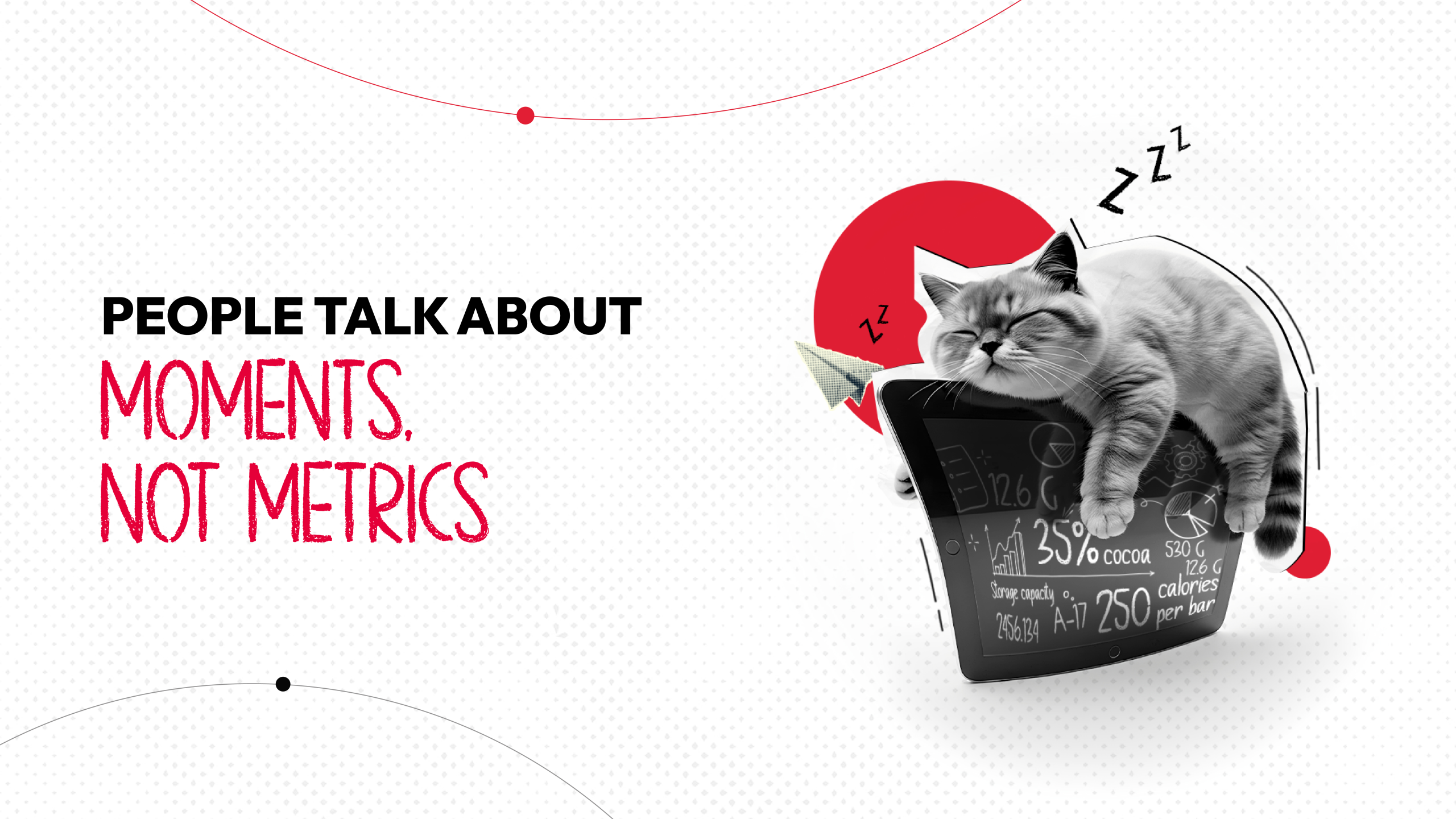
People naturally remember moments and feelings, not technical details. Very few people recall exact product specs like calories, percentages, or performance numbers. What sticks are stories that make them laugh, feel understood, or imagine themselves in a situation.
Stories turn ordinary products into memorable experiences, while features simply exist as information.
Why Are Our Brains Wired for Storytelling?
Stories activate multiple parts of the brain at once, including areas responsible for:
- Emotion
- Memory
- Sensory imagination
Facts and bullet points mainly engage analytical thinking, which fades quickly. This is why stories are easier to remember and recall than lists of features.
In short: stories create emotional engagement; specs create cognitive overload.
Why Do Stories Stick While Features Fade?
Features describe what a product is. Stories show what a product feels like.
For example, saying a chocolate bar has “35% cocoa and 250 calories” provides information but no emotion. Describing the experience of eating it after a long day, and the memories it triggers, creates a vivid, lasting impression.
People don’t buy products for their specs alone; they buy the experiences and emotions those products create.
Why Are Stories Harder to Copy Than Specs?
Product specifications and features can be easily copied by competitors. Stories cannot.
A strong narrative gives a product:
- Personality
- Voice
- Identity
When people connect with a story, they remember it, share it, and often retell it in their own words. This makes storytelling a powerful and defensible brand asset.
How Do Stories Build Trust and Relatability?
Stories create trust by showing empathy and understanding. They signal that a brand understands real human experiences, not just numbers.
While spec sheets are rarely shared, stories drive:
- Word-of-mouth
- Social sharing
- Emotional loyalty
People share stories because stories feel human.
Why Is Storytelling a Long-Term Strategy?
Specifications change as technology evolves. Stories endure.
A compelling narrative shapes how people perceive a brand over time. It becomes a mental shortcut for how that brand makes them feel, long after individual features are outdated.
Stories act as memory anchors, while specs are easily forgotten.
Conclusion: Why Stories Matter More Than Specs
Specs inform, but stories inspire.
Stories:
- Make products memorable
- Create emotional connections
- Turn campaigns into conversations
Before highlighting numbers and metrics, ask one question:
What’s the story people will remember?
That story, not the specs, is what truly matters.
Read More Articles :
